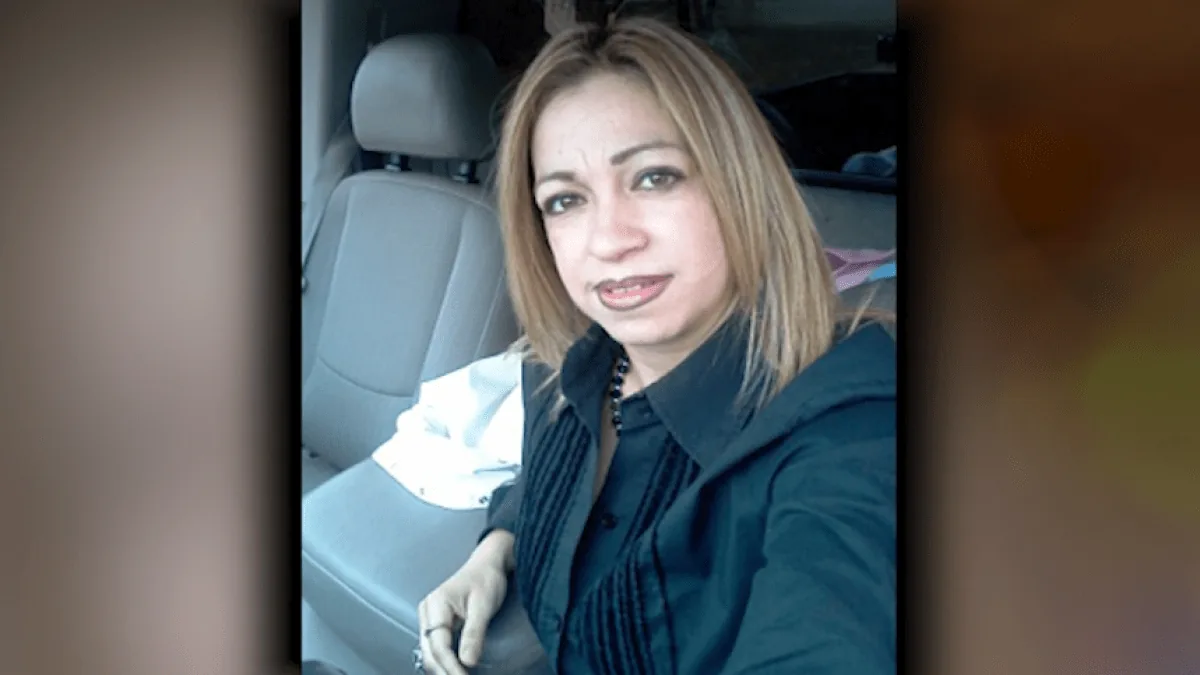
ARLINGTON, TX — Arlington police and the FBI say new DNA techniques have broken open a 14-year-old murder case that had long stalled after the 2012 killing of Irasema Chavez. Authorities announced the arrest of 42-year-old Mayra Velasquez on July 16, saying she is charged with capital murder in Chavez’s stabbing death.
Police say Chavez was found stabbed more than 100 times inside her Arlington apartment in 2012. Investigators spent years following surveillance video and other leads, but the case eventually went cold. The latest development came after detectives worked with the FBI’s Investigative Genetic Genealogy program and later matched Velasquez’s DNA to blood recovered at the scene.
How officers first found the scene in January 2012
Arlington Police Chief Al Jones said officers were called to Chavez’s apartment in the 2700 block of South Collins Street at about 8:51 a.m. on Jan. 20, 2012. A family member had found her unresponsive and covered in blood inside the apartment. Chavez, who was 33, was pronounced dead at the scene.
Crime scene investigators later found a fresh droplet of blood on a bedroom television stand. That sample was sent for DNA testing, and lab work showed it did not belong to Chavez. Instead, investigators said it came from an unknown Hispanic female. Detectives then uploaded the profile to the Combined DNA Index System, but no match was found at that time.
Years of follow-up left detectives without a name
After the initial testing, Arlington detectives continued to work the case from 2012 through 2024. Police said they followed up on leads, but none of them gave investigators a definitive answer about who killed Chavez. The case remained one of those homicides that lingered without a clear suspect, despite the physical evidence collected early on.
Investigators also reviewed surveillance video that showed a person walking into Chavez’s apartment. Even with that footage and the DNA profile, the case did not produce an arrest for years. The unsolved killing became a cold case until detectives found a new path forward in late 2024.
FBI genealogy work pointed detectives toward a suspect
In November 2024, Arlington police homicide investigators met with the FBI Dallas Field Office to ask whether the case would fit the bureau’s Investigative Genetic Genealogy program. The FBI agreed to help, and the case was then reviewed by specialists who use family-tree style genetic analysis to identify possible suspects when standard DNA searches fail.
In April 2026, the FBI team told detectives the work had pointed to a potential suspect: Mayra Velasquez. Police said Velasquez had once been a close friend of Chavez and lived only a few miles from the crime scene. That information gave investigators a new direction after more than a decade with no confirmed suspect.
Trash DNA sample tied Velasquez to the blood droplet
Police said detectives collected a DNA sample from discarded trash belonging to Velasquez in May 2026. That sample was sent to a crime lab for additional analysis. Lab testing determined that Velasquez’s DNA matched the blood droplet found on the bedroom television stand in Chavez’s apartment.
That result gave investigators the evidence they needed to move ahead with the arrest announced on July 16. Authorities have not publicly described any other forensic findings that played a role in the case, and they have not said what, if anything, led Velasquez to be present in the apartment before or during the killing.
Police say the motive remains unclear
Even with the arrest, investigators have not said why Chavez was killed. Law enforcement said the motive for the stabbing is still unclear. The case now turns from identification to the next phase of the criminal process, with Velasquez facing a capital murder charge.
The arrest also underscores how much forensic science has changed since the early 2010s. Dr. Alex Del Carmen, a criminologist not involved in the investigation, said DNA testing was far less advanced and more expensive when the case began. He said today’s methods can reveal far more about a sample than older techniques could provide.
Why experts say older cold cases are more solvable now
Del Carmen said modern DNA analysis can provide investigators with information that goes beyond a simple match, helping them narrow suspects in ways that were not possible years ago. He said the public often sees these cases as late-arriving justice, but that scientific progress is a major reason old files are getting reopened successfully.
For Arlington investigators, the case of Irasema Chavez shows how a small piece of biological evidence can still matter years later. What began with a single blood droplet on a bedroom television stand ultimately led to a genealogical lead, a new DNA sample, and an arrest in a homicide that had remained unsolved for 14 years.