BILLINGS, MT — A Yellowstone County homicide that haunted detectives, relatives and the Billings community for nearly five decades was formally closed Thursday after investigators identified the man they say killed 16-year-old Corina Lydia Contreraz in 1978.
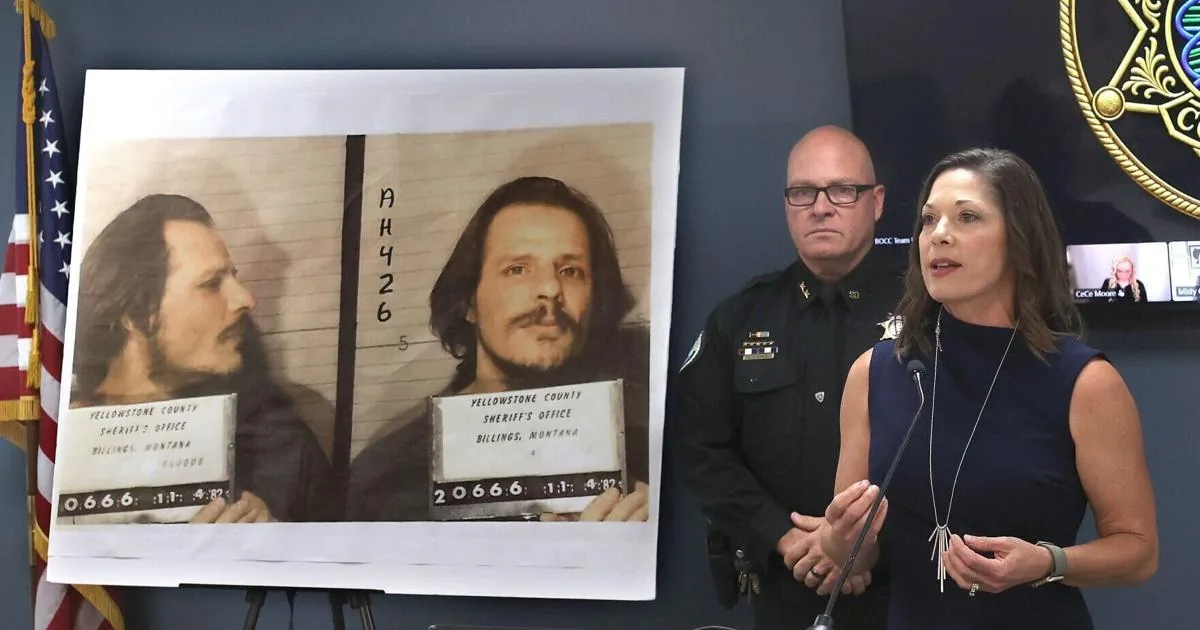
Sheriff Kent O’Donnell announced the breakthrough at a press conference in the Ostlund Building, where family members, friends, investigators and scientists gathered around a photo of Corina. The case, long kept alive through newspaper coverage, podcasts and detective files, had remained unsolved until recent DNA work connected physical evidence from the scene to Angelo James Stallsmith.
How Corina Contreraz was found east of Billings
Corina was found on the side of Pryor Creek Road near the Interstate 90 interchange on the morning of Dec. 22, 1978, after a Worden school bus driver spotted her body. She had left a friend’s home near South Park around 3 a.m. and was headed to another house in town, according to earlier reporting cited by investigators.
Officials said she died from multiple stab wounds and that the coroner ruled the death a homicide. For years, the only widely known facts about her death were basic details from the death certificate and the repeated efforts of detectives to keep the case active.
A Billings teenager remembered by friends and family
Contreraz had moved to Billings from Cleveland as a child and grew up in a large family. She attended Riverside Middle School and was a sophomore at Billings Senior High in 1978, standing just over 5 feet tall.
Friends described her Thursday as bright, funny and kind. Dotty Ramirez, who was 14 when she last saw Corina, said she remembered her friend’s laugh and her personality. Ramirez, now 63, was among the relatives and friends present when the sheriff announced the case had been solved.
Corina lived with her father and siblings on the South Side in the 600 block of South 34th Street and was active at Our Lady of Guadalupe Catholic parish. The year of her death was especially painful for the family, after the deaths of her mother in September and an older half-sister two months later.
What investigators preserved from the 1978 crime scene
Yellowstone County Sheriff’s Office detectives preserved evidence from Corina’s body and the scene and interviewed dozens of people over the years, but no arrests were made at the time. In 2002, investigators built a complete DNA profile from original evidence, though no match turned up in national databases.
The case gained new momentum in 2012 when the sheriff’s office created a Cold Case Unit. The unit also launched a website listing unsolved homicides, and by Thursday it showed nine cases. O’Donnell said current and retired members of law enforcement spent hundreds of hours on the Contreraz investigation.
Former Sheriff Mike Linder, who retired in August, said he followed the case closely for years. He was among the many officials who continued to push for answers even as the evidence grew older.
DNA from a 1982 booking card linked Stallsmith to the killing
About three years ago, investigators worked with several labs to improve the DNA analysis of the evidence tied to Corina’s death. Forensic genealogy and physical evidence eventually pointed them to Stallsmith as the most likely suspect.
Scientists then used a booking sheet from Stallsmith’s 1982 arrest, when he was charged with stealing a vehicle, to recover DNA from the card itself. That sample matched DNA found at the crime scene, giving detectives the confirmation they needed.
Forensic DNA expert Suzanna Ryan said the case turned on figuring out what trace of Stallsmith still existed after his death. He had no autopsy or biopsy samples available, and his body had been cremated after he died in a Billings hospital in 1990 at age 41.
A suspect with a long criminal history and no known link to the victim
Investigators said Stallsmith was 29 when Corina was killed. Yellowstone County Sheriff’s Capt. Daniel Paris said there was no evidence Stallsmith and Corina knew each other before the murder.
O’Donnell said 42 current and former law enforcement officers from 10 agencies contributed to the case over the years. The sheriff’s office said the effort included detectives, prosecutors and scientists who helped preserve evidence, re-examine leads and connect the old evidence to modern testing.
Stallsmith spent much of his life in and out of incarceration, including time at San Quentin Rehabilitation Center in California. He briefly escaped in 1972 before being apprehended in Kansas, investigators said.
Three cold cases now closed as families wait for answers
Thursday’s announcement closed one of the nine cases listed on the Cold Case Unit website and marked the third case from the unit’s roster to be solved. Two others remain open, including the deaths of Jeanette, whose body was found in the trunk of a burning car in 2000, and 21-year-old Marsha Helgeson, who was stabbed, beaten and left on Alkali Creek Road.
For Jennifer Contreraz, Corina’s last living sister, the news brought a long-awaited ending. Wiping away tears at the end of the press conference, she said, “It’s over. It’s finally over.”
O’Donnell said the sheriff’s office intends to keep working cold cases and emphasized that victims and their families remain a priority. For the Contreraz family, the announcement ended nearly 50 years of uncertainty, even as it confirmed what detectives had long believed: Corina’s killer had finally been identified.