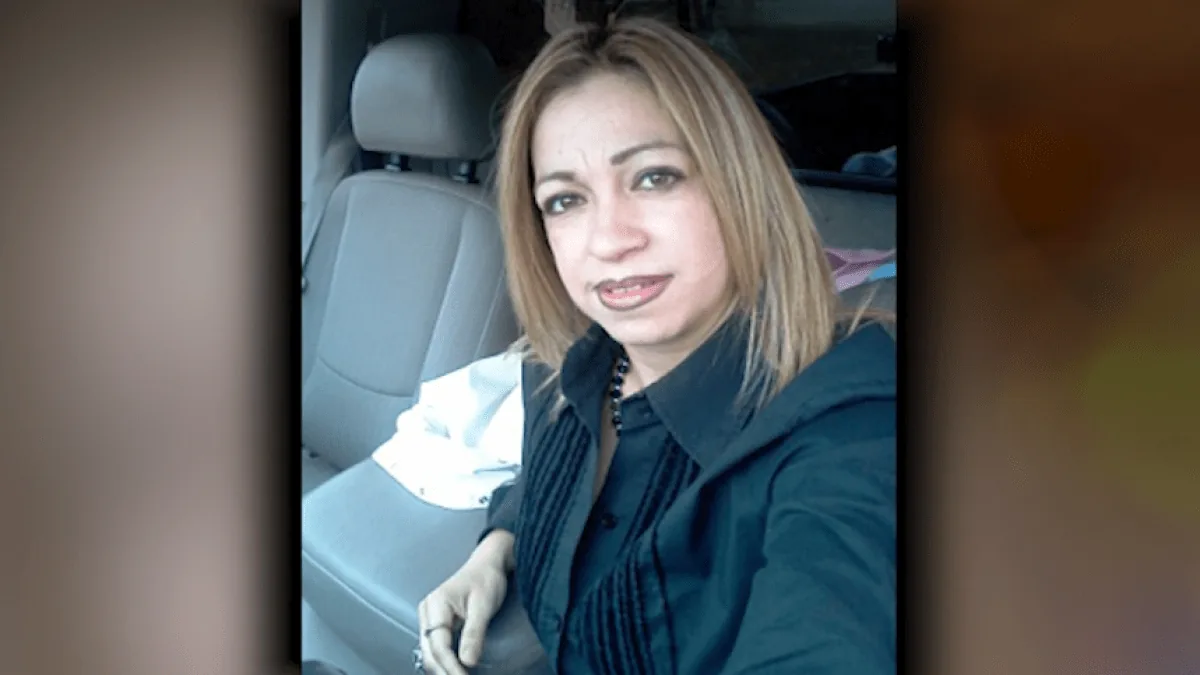
NEWARK, NJ — New Jersey authorities say DNA technology has solved a 44-year-old East Orange murder by identifying Larry Burney as the suspect in the 1982 killing of William Jenkins.
Burney died in prison in 2005, long before modern forensic genealogy could be used to revisit the case. The New Jersey State Police and the Essex County Prosecutor’s Office announced that a DNA match tied him to evidence collected in the fatal stabbing.
The case had remained unsolved for decades after Jenkins was found dead in his apartment on Halsted Street. Investigators say the breakthrough came after the matter was reopened through the state’s cold case network.
Police found William Jenkins bound and stabbed inside his East Orange apartment in April 1982
East Orange police responded on April 20, 1982, to 244 Halsted St. and found Jenkins lying face down next to his bed. His hands and feet were bound, and police said he had been stabbed multiple times.
At the time, East Orange detectives worked with the Essex County Prosecutor’s Office, but no arrest was made in the killing. The case then sat open for more than four decades.
The victim and the suspect were both East Orange residents, according to state police. Authorities have not said what led to the attack or whether Jenkins and Burney knew each other.
How investigators used genetic genealogy to move from unknown DNA to a name
In 2024, the Essex County Prosecutor’s Office asked the State Police Cold Case Unit for help through the Garden State Cold Case Network. Investigators sent biological evidence containing an unknown male DNA profile to Othram, Inc. for single nucleotide polymorphism analysis.
That work produced a DNA profile that could be used for investigative genetic genealogy, a method that traces distant family links to help identify unidentified suspects. By June 2026, state police and FBI genetic genealogy work had narrowed the possible suspects to one of three brothers connected to Newark.
That process ultimately led investigators to Burney. A DNA reference sample tied to him was then compared directly with evidence from the Jenkins case, and authorities said it matched.
Authorities said Burney had died in South Woods State Prison in 2005
Burney was already dead when investigators reached the match. Police said he died in 2005 while incarcerated at South Woods State Prison.
Officials said the identification still matters because it gives Jenkins’ family an answer after decades of uncertainty. Essex County Prosecutor Theodore N. Stephens II and Chief of Detectives Mitchell G. McGuire III said the result reflected the persistence of investigators who kept pushing the case forward.
Jeanne Hengemuhle, acting superintendent of the State Police, said modern DNA methods have helped bring new life to old evidence and emphasized that justice does not expire with time.
Burney had a separate Newark robbery conviction before the murder breakthrough
Police also pointed to Burney’s criminal history in Newark. A March 23, 1984, Star-Ledger article reported that he had been sentenced to life in prison after being convicted of armed robbery involving two Newark men and a sawed-off rifle.
According to Essex County Assistant Prosecutor Daniel Nowell at the time, Burney was convicted of two counts of armed robbery, two counts of illegal weapon possession, receiving stolen property and possession of dum-dum bullets.
Those charges came from a Dec. 12, 1982, robbery in Newark in which Burney and an accomplice allegedly held two men at gunpoint and stole wallets, money, watches and a car. State Superior Court Judge Michael J. Degnan ordered him to serve at least 25 years before parole eligibility.
Cold case funding and lab partnerships helped reopen the decades-old homicide
State police said the Jenkins investigation was supported by federal Sexual Assault Kit Initiative grant funding, which helps pay for cold case work, including advanced DNA testing and genetic genealogy. Officials said that support has become an important tool in revisiting unsolved violent crimes.
The State Police Cold Case Unit, the NJSP Office of Forensic Sciences, county and local law enforcement, the FBI and outside labs such as Othram have worked together on similar cases. Authorities said those partnerships are central to moving old evidence into modern testing systems.
Police are still asking for tips in the Jenkins homicide. Anyone with information can contact the State Police Cold Case Unit or the Essex County Prosecutor’s Office, and anonymous submissions are allowed.