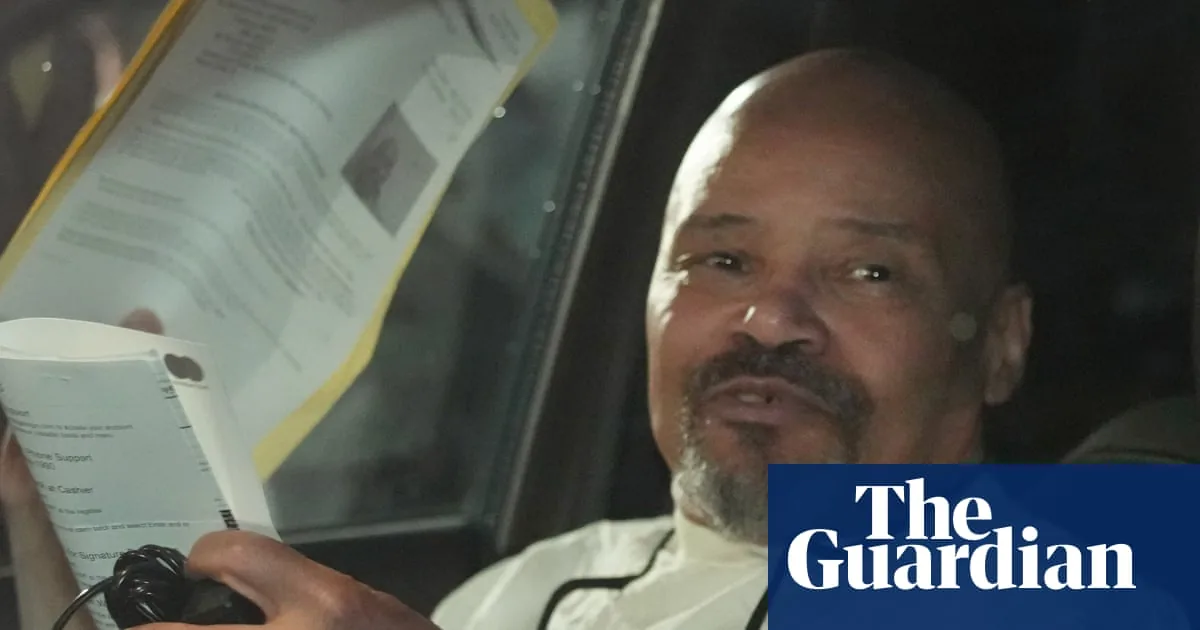
PROVO, UT — A Utah man who has spent more than four decades on death row was released from jail after newly analyzed DNA evidence excluded him from biological material tied to a 1985 homicide. Douglas Stewart Carter, 71, left the Utah County jail late Monday after a judge ordered him released on bail.
He must wear a GPS monitor until a new trial begins. The release came after years of litigation in a case that has been repeatedly reviewed by Utah courts, including a state Supreme Court decision last year that ordered a new trial because of investigator misconduct.
How Carter was convicted and retried
Carter was first convicted in 1985 in the killing of Eva Olesen, the aunt of a former Provo police chief. Prosecutors said he killed her during a violent attack that involved both stabbing and shooting.
No physical evidence tied Carter to the crime scene. His conviction rested on a confession and testimony from two witnesses, both of whom later recanted. Carter also signed a confession, but he has long said police coerced him into doing it.
The case did not end with that first verdict. Carter was tried again in 1992 and was again found guilty, then sentenced to death.
DNA results from blood and a knife handle
The latest turn came from DNA analysis received on Sept. 22. According to the court record, the testing excluded Carter as a possible match to blood found on a doorknob and to genetic material recovered from the handle of a knife used in the attack.
Those findings mattered because the knife was one of the central pieces of physical evidence in the case. Judge Derek Pullan said the new results further weakened the state’s case against Carter, even though he also said a reasonable jury could still conclude that Carter was the killer.
The ruling did not end the prosecution, but it changed Carter’s immediate status. Pullan decided he could leave jail while the case continues toward another trial.
Judge says bail is warranted before a new trial
Pullan had set a two-month retrial for 2027. That timeline remains in place, but the judge’s bail decision means Carter will wait for that proceeding outside custody rather than on death row.
Utah County prosecutors last week withdrew their notice that they intended to seek the death penalty again. Prosecutor Erwin Petilos told the judge that revisiting Carter’s bail was “necessary and fair” while the state continues reviewing the remaining evidence.
The bail decision reflects a legal landscape that has shifted several times over the years. Even with the new DNA findings, the court has not thrown out the case, and the prosecution still has the opportunity to press forward at retrial.
Defense says the case has taken Carter’s life
Carter’s lawyer, Neal Hamilton, said he was relieved that his client is no longer on death row, but said the length of the incarceration remains devastating. In a statement to KSL, he said the family is grateful Carter “finally” went home, but also heartbroken by what he described as the theft of his life.
Hamilton said Carter was a young man “on the cusp of his future” when he was first arrested and is now a 71-year-old man hoping to live through his remaining years with some freedom. Hamilton is also asking prosecutors to dismiss an aggravated murder charge that is still pending.
The defense has made innocence a central argument for years, pointing to the recanted witness statements, the lack of physical evidence, and the new DNA exclusions as signs that the conviction should not stand.
Family of Eva Olesen voices concern over the release
Relatives of Eva Olesen said they were troubled by Carter’s release. At Monday’s bond hearing, Theresa Olesen, a daughter-in-law of Eva Olesen, said the family had serious concerns about allowing him out of custody.
She said the DNA results did not end the family’s belief that Carter may have been involved. “It doesn’t mean he wasn’t there,” she said, adding that they want justice for Eva and want any role Carter may have had to be established.
The family’s response underscores how the case remains unresolved even after decades. Carter is now out of jail, but the murder charge, the new trial preparation and the lingering dispute over the evidence all remain active.