EAST ORANGE, NJ — New Jersey State Police say renewed DNA testing and follow-up investigation have identified a suspect in the 1982 killing of an East Orange man, closing a major gap in a case that had gone unsolved for more than 40 years.
The suspect was identified as Larry Burney, formerly of East Orange. State Police said Burney died in 2005 while incarcerated at South Woods State Prison, but investigators later linked him to evidence collected in the William Jenkins homicide.
Jenkins was found dead inside his apartment on April 20, 1982, and police said he had been stabbed multiple times. His hands and feet were bound, and he was lying face down next to his bed when officers discovered him.
Police found William Jenkins bound and stabbed inside his apartment on Halsted Street
According to investigators, Jenkins was discovered at 244 Halsted St. in East Orange. The conditions at the scene pointed to a violent attack: he was face down, tied up, and had suffered multiple stab wounds.
The killing became one of the long-running unsolved homicides in Essex County. At the time, the East Orange Police Department and the Essex County Prosecutor’s Office handled the investigation, but no suspect was publicly identified for decades.
The details released by State Police show that the original case file remained active enough to support renewed forensic work years later. That effort eventually gave investigators a new path to follow.
Cold case investigators reopened the file in 2024
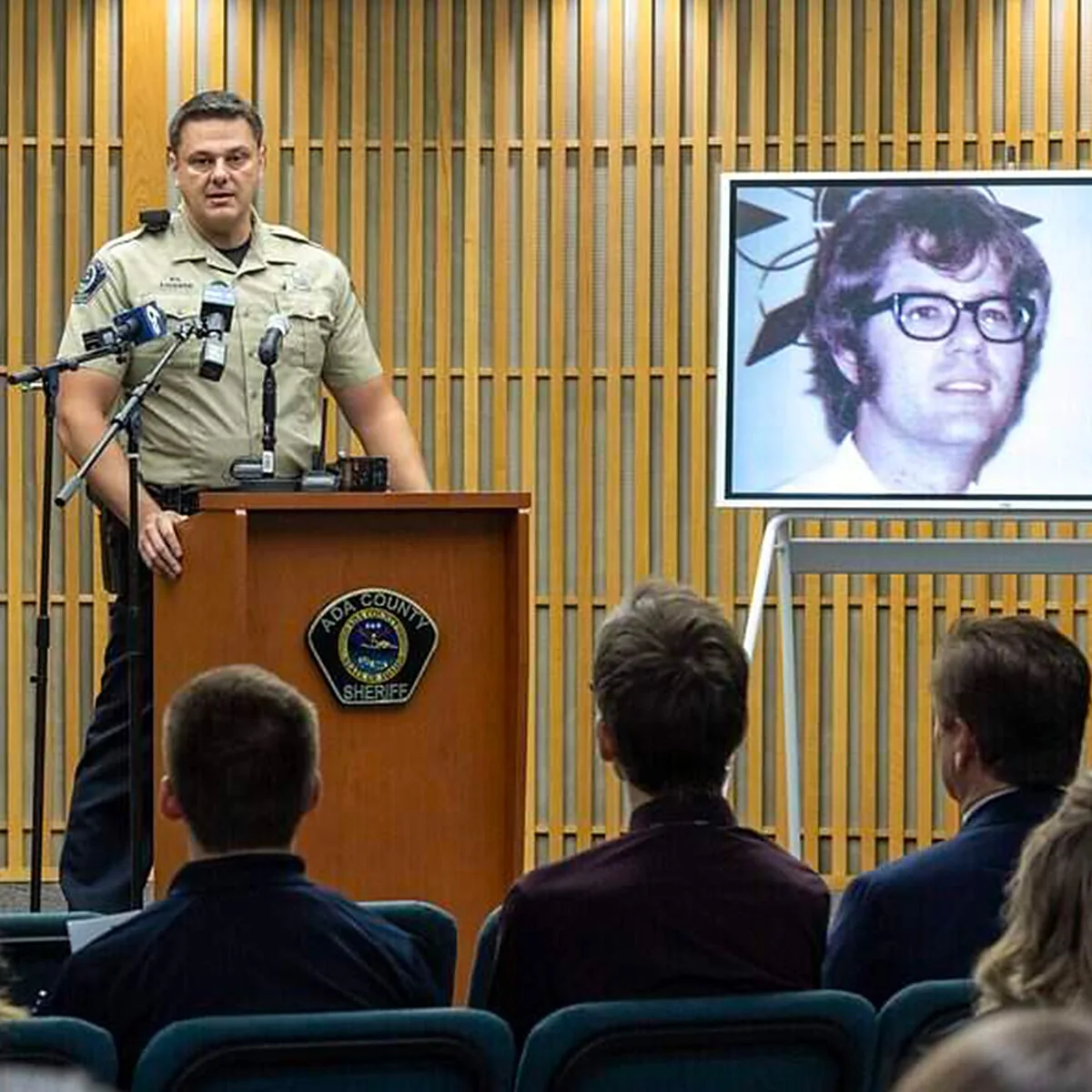
In 2024, the Essex County Prosecutor’s Office asked the New Jersey State Police Cold Case Unit to help with the still-open homicide investigation. That request brought in detectives with experience working older cases that may benefit from modern forensic methods.
Investigators submitted an item of evidence containing an unknown male DNA profile to Othram, a private forensic laboratory. The goal was to use investigative genetic genealogy, a technique that can help identify people by comparing DNA with family-linked data.
State Police did not say what the evidence item was, and they also did not explain how the later reference sample tied to Burney was obtained. Even so, the new testing gave investigators enough information to move the case forward.
Genetic genealogy narrowed the DNA profile to three Newark-area brothers
In June 2026, State Police and the FBI used investigative genetic genealogy to narrow the unknown DNA contributor to one of three brothers with ties to Newark, according to State Police. That step helped investigators focus their work on a much smaller group of possible relatives.
After additional investigative work, State Police said Burney emerged as the primary suspect. The agency then obtained a DNA reference sample associated with him for direct comparison.
That comparison confirmed Burney was the source of the unknown male DNA profile recovered from evidence in the Jenkins homicide investigation, State Police said. The match gave investigators the forensic support they needed after years of uncertainty.
Burney died in 2005, but investigators say the evidence still matched him
State Police said Burney died in 2005 while serving time at South Woods State Prison. His death did not end the investigation, because DNA recovered from the old case file could still be tested against modern reference material.
The identification now gives investigators a named suspect in a case that had been unsolved since 1982. It also shows how older physical evidence can remain useful when laboratories and genealogy methods improve.
Authorities have not said whether any additional suspects are being considered. The public identification released by State Police centers on Burney as the primary suspect tied to the DNA evidence.
Authorities are asking for more information from the public
State Police said anyone with information about Jenkins’ killing can contact the New Jersey State Police Cold Case Unit at 1-833-4NJ-COLD or the Essex County Prosecutor’s Office. Anonymous tips are accepted.
The case remains significant in East Orange because it involved a local resident killed in his apartment and left unresolved for generations. The new forensic development may help answer questions that have remained open since April 1982.
For investigators, the breakthrough reflects a broader pattern in cold cases: evidence that once went nowhere can sometimes produce results when reexamined with newer tools.