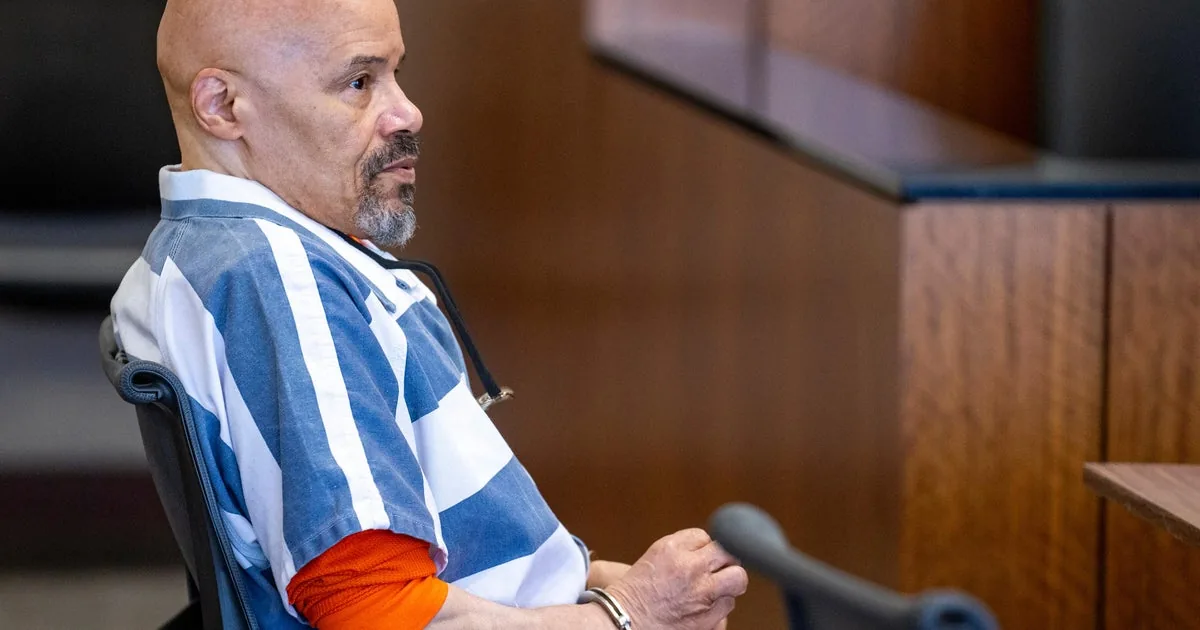
FAIRFAX, VA — A Virginia man convicted in a 2001 killing has been freed after spending 25 years in prison, including more than 10 years on death row. A judge vacated Justin Michael Wolfe’s murder conviction after the only witness who tied him to the crime recanted, and Wolfe later accepted a plea deal on marijuana and robbery charges that led to his release.
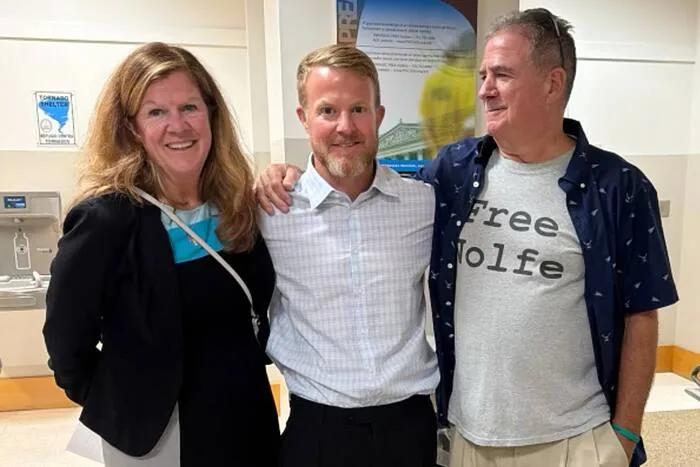
Wolfe’s case, which once moved him close to an execution date, ended Monday with his walk out of prison. The 45-year-old said his first hours of freedom included eating pizza, running errands with his mother and making plans for a family dinner. He said he most looks forward to getting to know the nieces and nephews he missed while incarcerated.
The murder case that sent Wolfe to death row
Prosecutors said Wolfe arranged the killing of Daniel Petrole, a high school friend and drug supplier, in Bristow, Virginia. According to the case presented by authorities, Wolfe hired another young marijuana dealer, Owen Barber, to shoot Petrole on March 15, 2001.
Authorities also said Wolfe owed Petrole more than $60,000. Barber later pleaded guilty under a deal to avoid the death penalty and received a 60-year sentence for the murder. Wolfe, who was 19 when the case began, denied any role in the killing and testified in his own defense before a jury convicted him in 2002 and imposed a death sentence.
The case drew broad attention because prosecutors described a large drug ring involving Wolfe and other teenagers in northern Virginia. Authorities estimated the group may have sold as much as $10 million worth of marijuana and ecstasy while appearing to live ordinary suburban lives.
The witness at the center of the prosecution later changed his story
The only person directly linking Wolfe to the murder-for-hire case was Barber, and his account later fell apart. Barber recanted his trial testimony and said Wolfe was not involved in Petrole’s death. He also said law enforcement repeatedly threatened him with the death penalty unless he cooperated against Wolfe.
After Barber’s initial statement to a friend led police to him, the case continued to move through the courts for years. Legal advocacy groups including the U.S. Campaign to End the Death Penalty and the Innocence Project at the University of Virginia School of Law took up Wolfe’s cause, arguing that the prosecution had gone too far.
In a later sworn statement, Barber again said Wolfe had nothing to do with the killing. Two other people also signed statements saying Barber had told them Wolfe was not involved.
Federal judges found misconduct and overturned the death sentence
Wolfe’s death sentence did not survive appeal. A federal judge later found that prosecutors had engaged in misconduct and vacated the capital sentence, ordering a new trial.
Even then, the case remained unresolved. Barber refused to testify for Wolfe because he feared doing so would violate the plea deal in his own case and could expose him to a new death penalty trial. In 2016, Wolfe took another plea agreement and was resentenced to up to 41 years in prison. That deal also required him to apologize to Petrole’s family.
At that sentencing, Wolfe told the family he understood the pain and suffering caused by the case and said he was sorry. He also acknowledged that an apology would not be enough.
Death penalty abolition in Virginia changed the legal stakes
Virginia abolished the death penalty in 2021, changing the leverage that had shaped earlier plea negotiations. After that, Barber signed a new sworn statement in 2023 saying Wolfe had no role in Petrole’s death.
Last year, a unanimous federal appellate panel said Wolfe had been the victim of prosecutorial misconduct. In an opinion written by U.S. Circuit Judge Stephanie Thacker, the court said the commonwealth had decided Wolfe was guilty and then tried to keep him in prison at any cost.
That ruling added pressure to resolve a case that had already stretched across generations of legal review. Wolfe’s release this week came through a new plea deal that ended his prison term.
A family’s relief, and a reminder of what was lost
Prince William County Commonwealth’s Attorney Amy Ashworth called the resolution a “just and appropriate outcome” in a case she said had been mishandled by a previous administration. She also said people would likely differ over what the deal means, with some viewing it as proof of guilt and others as proof of innocence.
Petrole’s family issued their own statement asking for privacy and saying they hope to begin closing the chapter by remembering Danny for his life rather than the circumstances of his death. Wolfe’s mother said the system was broken and described the treatment of both families as cruel.
Wolfe said he is still adjusting to simple freedoms, including choosing when to sleep and showering without a correctional officer nearby. After a quarter-century inside, even a trip to Costco felt overwhelming. Still, he said he expects to adapt and eventually wants to become an advocate for criminal justice reform.