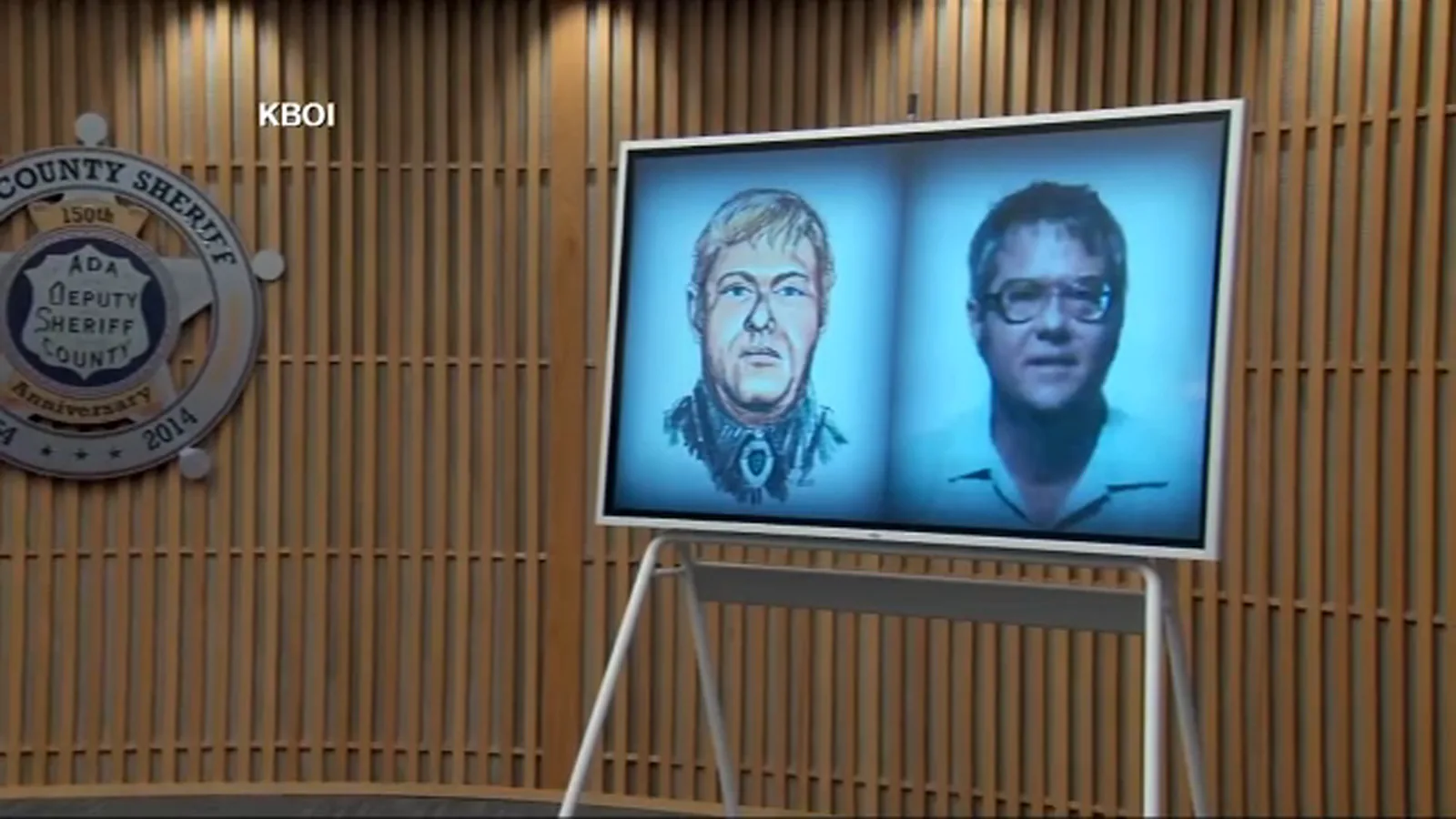
CHICAGO, IL — Detectives in Idaho have identified a man long known only as the “unknown wanderer” and say he may have a possible connection to the unsolved Tylenol murders in the Chicago area.
Officials identified him as Dr. Mathew Francis Betkouski, the man found dead inside a Boise church in December 1982 after taking cyanide. The new identification has pushed investigators to re-examine his movements, personal items and possible links to other cyanide deaths.
Police said Betkouski had a troubled mental health history, moved often across the country and may have spent time in Chicago shortly before the Tylenol killings.
Police identify the Boise church death as Mathew Francis Betkouski
Betkouski was found dead in a Boise, Idaho, church in December 1982. Police said he died by ingesting cyanide inside the building.
For decades, he remained unidentified as the “unknown wanderer.” Detectives now say they believe they have linked the name to that body and gathered enough information to begin piecing together his life before his death.
Officials said the identification came through old belongings that had been preserved after his brother died in 2021. Among those items were his desk and bed, which helped investigators recover information tied to Betkouski’s background and movements.
Mental health history and chemical experiments drew investigators' attention
Police said Betkouski had received multiple mental health treatments in the 1970s. They described him as paranoid, possibly schizophrenic, and a loner.
Investigators also said that in 1982 he was experimenting at home and had been fired from a laboratory job after taking chemicals from work. Those details mattered because detectives were trying to determine whether he had access to poison and whether his behavior fit a broader pattern.
Officials said they found evidence that he had made homemade cyanide among his belongings. Even so, police said that poison was different from the cyanide used in the Chicago-area Tylenol murders.
Maps of Chicago and a possible visit in late 1981 raised questions
Among the items police reviewed were maps of Chicago and photographs that appear to show Betkouski in the city in December 1981. Investigators believe that timing could matter because the Tylenol murders happened less than a year later.
Police said the man lived in several states during the late 1970s and early 1980s, including California, Texas, New Mexico, Ohio and Florida. That wide travel history has made it harder to reconstruct where he was and what he was doing at any given time.
Officials are now hoping the identification will lead to other cold cases involving cyanide deaths and possibly reveal additional details about Betkouski’s movements before he died in Idaho.
Why detectives in Idaho shared the case with Chicago and Arlington Heights
Idaho police said they cannot label Betkouski as a suspect in the Tylenol murders because it is not their case. Still, they sent information to investigators in Chicago and Arlington Heights, Illinois, so those agencies could assess whether the identification changes anything about the long-running investigation.
The case continues to draw attention because the Tylenol murders remain one of the most notorious unsolved crimes in the United States. In the fall of 1982, seven people died within 24 hours after taking Tylenol laced with cyanide.
The poisonings led to an enormous public scare and decades of uncertainty, but no one has ever been convicted of the killings themselves.
A veteran forensic psychiatrist says experts viewed Betkouski as a viable suspect
Forensic psychiatrist Dr. Park Dietz said he worked the Chicago case in the 1980s and later presented the Betkouski file to other forensic psychiatrists and an FBI group. Dietz said those experts all believed Betkouski was a viable suspect.
That opinion does not solve the case, but it suggests why the identification has attracted new interest. The Tylenol investigation has always been challenging because the poisonings happened quickly, the evidence was limited and the suspect pool was wide.
Dietz’s assessment adds another layer to a case that has remained unresolved for more than four decades.
A cold case that has never fully gone away
The Tylenol murders have remained in public memory partly because of how fast the deaths unfolded and how dramatically they changed consumer safety practices. The case has never been solved, and its central questions still linger for victims’ families and investigators.
James Lewis, the only person ever convicted in connection with the killings, died in 2023. Even so, the investigation continues to attract attention whenever new leads emerge or old evidence is reexamined.
With Betkouski now identified, police in Idaho and Illinois have a new name to consider as they look back at one of the nation’s most famous poisonings.