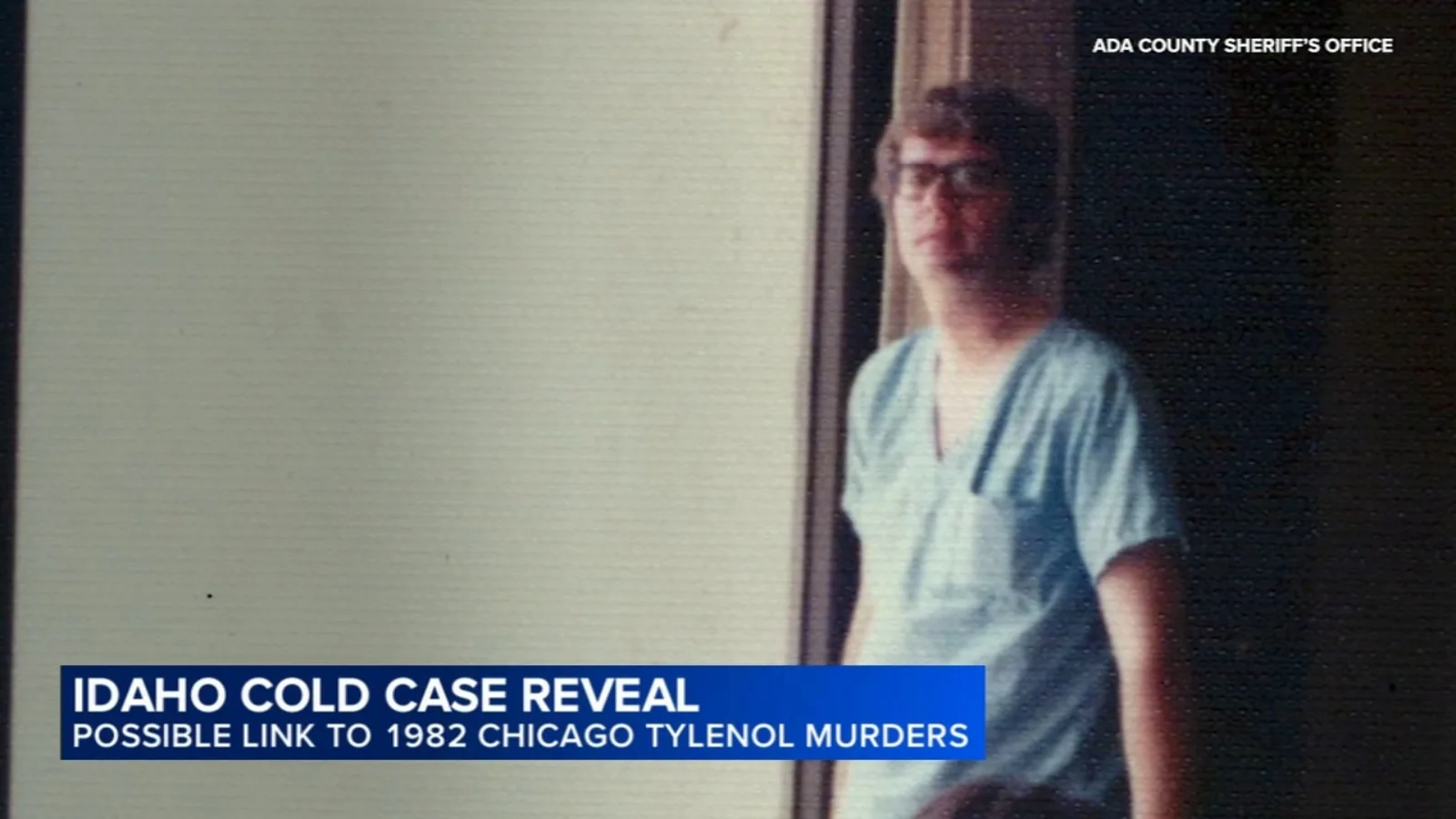
CHICAGO, IL — Idaho investigators have identified a new person of interest in the 1982 Tylenol murders, but they say they still have no evidence placing him in the Chicago area when the poisonings happened. The Ada County Sheriff’s Office said Wednesday that Dr. Matthew Betkouski, a chemist known as the “Unknown Wanderer,” deserves further scrutiny after a decades-long review of his background and comments he allegedly made to co-workers.
Betkouski died by suicide in December 1982 inside a Catholic church in Boise, Idaho, according to investigators. The fresh attention comes more than four decades after seven people died after taking cyanide-laced Tylenol capsules in the Chicago area, a crime that led to a national recall and major changes in how over-the-counter medicine is packaged.
Investigators say old workplace remarks drew attention decades later
Ada County detectives said their review of Betkouski’s career turned up statements they believe warranted a closer look. Detective Tim Cooper said co-workers at a fragrance company in Jacksonville recalled Betkouski talking about “the perfect crime” and describing cyanide as a less messy way of taking one’s life.
Investigators said they later found a similar comment from his time at Lockheed Martin in New Mexico in early 1982. Cooper said Betkouski allegedly spoke about how poison could be placed into over-the-counter capsules if someone wanted to do so. The sheriff’s office said those remarks, viewed alongside the rest of the file, were enough to put his name back into the investigation decades after the killings.
The 1982 poisonings killed seven people and changed consumer packaging
The Tylenol murders remain one of the most notorious unsolved crimes in the Chicago area. Seven people died after taking capsules contaminated with cyanide, including a 12-year-old child and three members of one family in Arlington Heights, investigators said. The deaths quickly set off alarm across the region and far beyond it.
Authorities said the poisonings prompted the recall and destruction of millions of bottles of Tylenol. The case also pushed manufacturers toward the tamper-proof packaging consumers now expect on many medicines and products. The lasting impact is part of why even a new lead in the case continues to draw intense attention from investigators, families and the public.
Ada County says it can place Betkouski in Chicago in late 1981
While the sheriff’s office said Betkouski merits further examination, investigators stressed the limits of what they have found. Ada County officials said they were able to place him in Chicago in late 1981, but not in the area at the time the cyanide-laced capsules were taken from store shelves in September 1982.
Cooper acknowledged that gap in the timeline. “I cannot put his shoes in a pharmacy store aisle 44 years ago. But I also can’t dismiss his statements, his actions,” he said. That uncertainty is central to the current review, which does not amount to a conclusion about who carried out the murders.
Chicago police, Arlington Heights and the FBI are reviewing the file
The Chicago Police Department and Arlington Heights Police Department confirmed they received the investigative file from Ada County and are reviewing it. Neither agency released additional details about what investigators are examining or whether the file changes the status of the long-running case.
The FBI took a more cautious tone, warning against drawing conclusions from claims that have not been verified. In a statement, the bureau said there have been repeated but unsubstantiated claims over the past 44 years and that it remains the lead agency working to release credible information once evidence supports a true resolution.
Families want transparency as the case remains open
Relatives of victims continue to press for answers. Michelle Rosen, whose mother, Mary Reiner, was among those killed, called for transparency and said investigative records should be made public. Her statement reflected the frustration many families still feel after decades without a definitive answer.
Authorities have never identified James Lewis as the person who carried out the killings, even though he was later imprisoned on an extortion charge connected to the case. For now, the newest name in the investigation adds another chapter to a case that has long resisted closure, even as investigators say they are continuing to examine what Betkouski may have meant and where he was before the poisonings.